
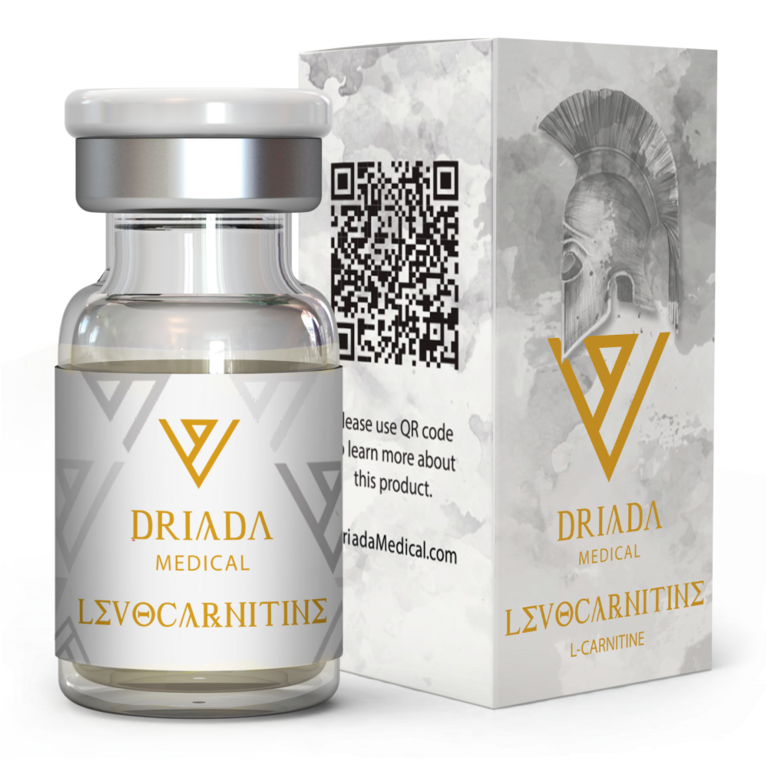
Driada-Levocarnitine (L-carnitine)
Indications:
Levocarnitine is used to prevent and treat carnitine deficiency. It is particularly indicated for patients with kidney disease undergoing dialysis and for individuals whose bodies cannot adequately utilize carnitine obtained from the diet. Carnitine deficiency can lead to complications affecting the liver, heart, and muscles. Treatment with levocarnitine should be guided by a healthcare professional.
Forms and Administration:
Levocarnitine is available in the following dosage forms:
- Oral solution
- Capsules
- Tablets
- Liquid-filled capsules
- Injection
Important Distinction:
nitine (L-carnitine) is the biologically active form used to treat carnitine deficiency. It should not be confused with D,L-carnitine (sometimes labeled as “vitamin B T”), which is not effective in treating deficiency and may interfere with the action of levocarnitine.
Drug Interactions:
Levocarnitine may interact with certain medications. Notable interactions include:
- Anticoagulants: Acenocoumarol, Warfarin
- Other potential interactions may occur with specific foods, alcohol, or tobacco use.
Patients should inform their healthcare provider of all medications and supplements they are taking to avoid adverse interactions.
Precautions:
Certain medical conditions may require dose adjustments or close monitoring:
- Seizure disorders: Levocarnitine may increase seizure frequency or severity in patients with a history of seizures.
- Severe renal dysfunction: Prolonged high-dose oral levocarnitine can accumulate in patients with significant kidney impairment.
- Take levocarnitine with or immediately after meals.
- Liquid forms should be ingested slowly and can be mixed with drinks or soft foods.
- For optimal blood levels, doses should be spaced evenly throughout the day, with at least 3–4 hours between doses.
- Do not change dosage forms or brands without consulting a healthcare professional.
Dosage Recommendations:
Dosage varies based on patient age, weight, and medical condition. The following represents typical dosing ranges:
Oral Solution:
- Adults and teenagers: 1 g once daily with food; dose may be adjusted by a physician.
- Children: 50 mg/kg/day (22.7 mg/lb/day), divided into smaller doses with meals; dose adjustments as directed by the physician.
Tablets:
- Adults and teenagers: 990 mg two to three times daily with meals.
- Children: 50 mg/kg/day (22.7 mg/lb/day), divided with meals; adjustments as needed.
Injection:
- Adults and children (general carnitine deficiency): 50 mg/kg/day intravenously; dose adjustments per physician guidance.
- Hemodialysis patients: 10–20 mg/kg/day after dialysis; dose may be reduced based on laboratory results after 3–4 weeks of therapy.
Storage:
- Store in a tightly closed container at room temperature, away from heat, moisture, and direct light.
- Do not freeze.
- Keep out of reach of children.
- Dispose of outdated or unused medication properly.
Be the first to review “Driada-Levocarnitine (L-carnitine)”
Related products
peptides
peptides
peptides

peptides

peptides
peptides

peptides
Reviews
There are no reviews yet.